Biomes
Going Medieval offers multiple biomes, each with unique climates, resources, and challenges. Choosing a starting location that matches your playstyle is the first step toward colony success. This guide details the characteristics, advantages, and recommended strategies for each terrain type.
Temperate Forest
The Temperate Forest is the most recommended starting terrain, ideal for beginners. It features four distinct but moderate seasons, abundant wood resources, and fertile soil for farming. Rivers provide water, and diverse wildlife makes hunting and gathering easy.
Pros
- Abundant wood
- Fertile soil
- Rich water sources
- Moderate seasons
- Diverse game
Cons
- No special advantages
- Average ore
- Medium raid frequency
Mountain
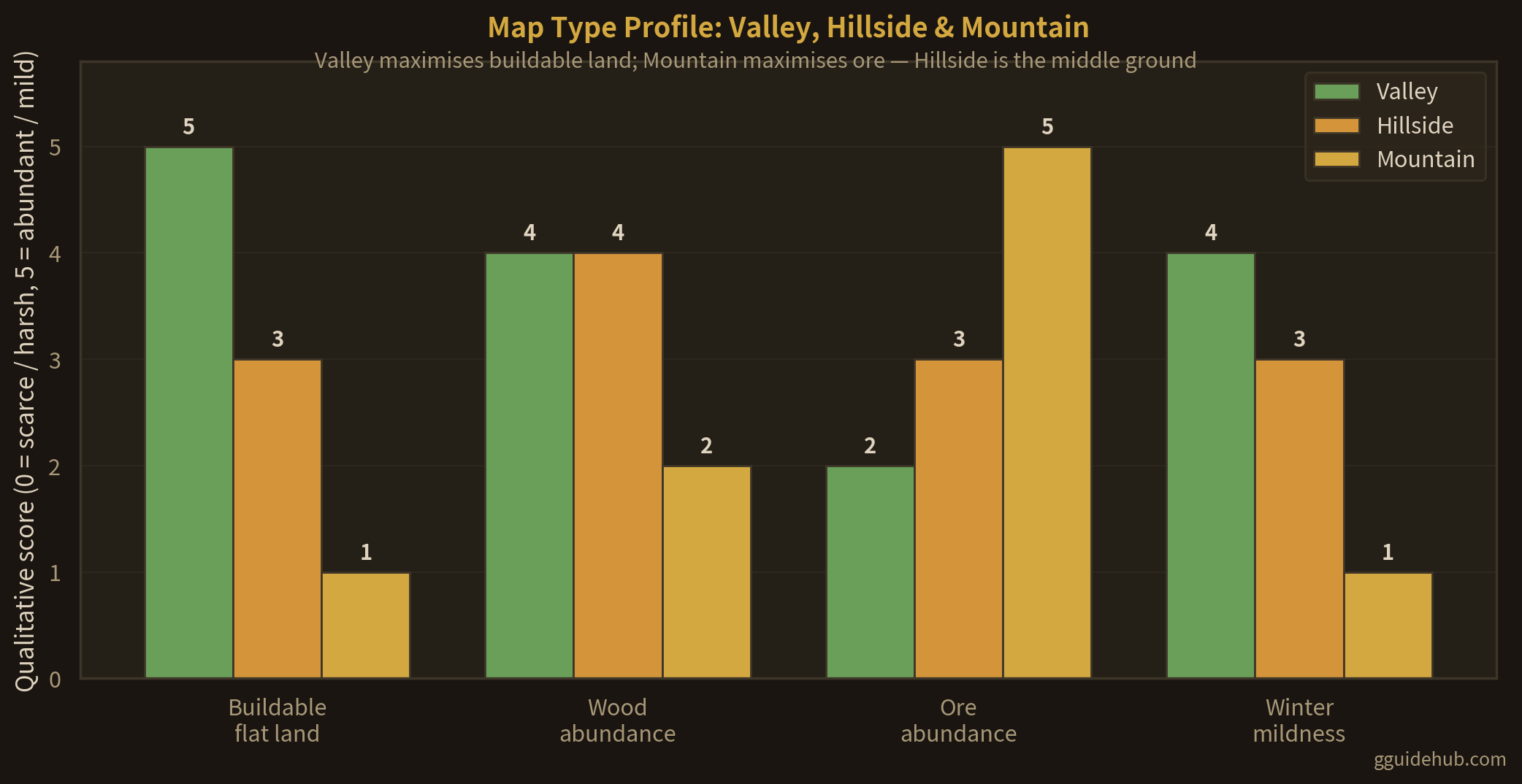
Mountain terrain boasts rich ore deposits, making it ideal for developing a metal industry. You can excavate large underground bases inside the mountain with superior natural defense. However, flat surface area is limited, requiring careful farming planning. Winter temperatures are even colder, demanding more heating.
Pros
- Rich ores
- Natural defense
- Large underground space
- Constant-temp underground storage
Cons
- Small farming area
- Colder winters
- Less wood
- Building restricted
Grasslands
Grasslands are flat and open with large areas of the most fertile soil — the most efficient terrain for farming. However, they lack natural barriers, so defense relies entirely on constructed walls. Wood and ore resources are scarcer, requiring trade to supplement. Best suited for players who excel at defense.
Pros
- Large farming area
- Richest soil
- Unrestricted building
- Wide visibility
Cons
- No natural defense
- Scarce wood
- Few ores
- Needs extensive walls
Site Selection Tips
Beginners are strongly recommended to start with Temperate Forest — balanced resources and moderate difficulty. Advanced players can try Mountain terrain, leveraging underground spaces for a fortified base. Grasslands suit players who enjoy defense challenges and need to quickly establish walls.
Regardless of terrain, pay attention to three factors when choosing a site: 1) Near a water source (river or lake); 2) Slightly elevated (avoid flooding); 3) Nearby trees and rocks (basic building materials). Choosing a location near the map edge reduces the number of attack directions.
FAQ
Which terrain is best for beginners?
Temperate Forest is the best choice. Balanced resources, moderate seasonal variations, and natural barriers (trees) make it ideal for learning the game mechanics. Try other terrains once you're comfortable.
How do I build a farm on Mountain terrain?
Create farmland on flat areas at the mountain's base, or plant on terraced platforms along the slope. If flat land is truly insufficient, prioritize high-value crops (barley, herbs, redcurrant) and trade for low-value crops (cabbage).
Can I change terrain mid-game?
No. The starting terrain is fixed for the entire playthrough. However, you can explore different areas within the same map, such as relocating from the forest to a nearby mountain. Choose your starting location carefully.
Last updated: July 22, 2026